
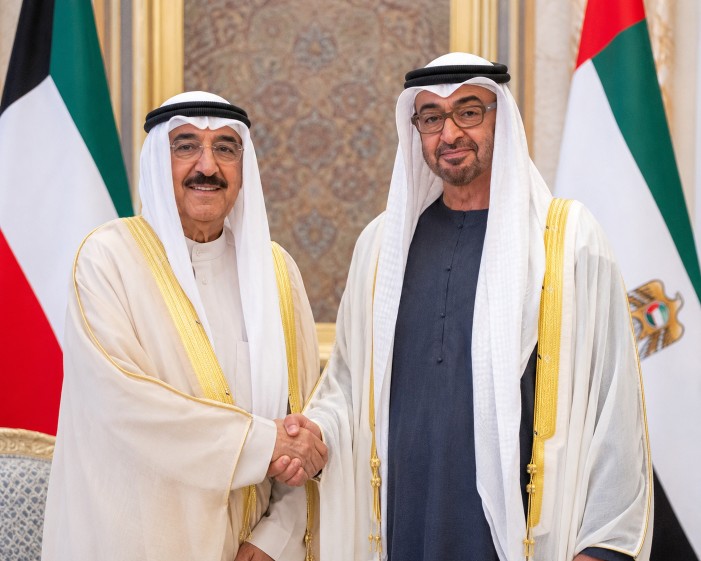
In a significant diplomatic engagement, Sheikh Mohamed bin Zayed Al Nahyan emphasized the necessity of enhancing regional peace and stability during his official visit to Kuwait. This visit followed a series of aggressive missile and drone attacks targeting the Gulf nation, launched from Iran. In his discussions with Sheikh Meshal Al-Ahmad Al-Jaber Al-Sabah at Bayan Palace, both leaders reiterated their dedication to bolstering regional security, achieving enduring peace, and deepening bilateral cooperation. They also explored avenues for expanding economic and development collaborations.
The backdrop to Sheikh Mohamed’s visit was tense, with Kuwait’s air defenses having just intercepted multiple ballistic missiles, a cruise missile, and several drones. These attacks resulted in debris falling across various areas, injuring one person and causing material damage. The Kuwaiti authorities strongly denounced the assaults, labeling them as violations of the nation’s sovereignty and a direct threat to regional stability. They asserted their right to implement all necessary measures to defend their territory, in alignment with international law.
The recent developments underscore the fragility of peace in the region, as well as the ongoing threats that countries in the Gulf face. Kuwait’s government expressed its strong disapproval of the attacks, emphasizing the need to protect its sovereignty and ensure the safety of its citizens. The commitment to regional security was echoed by the United Arab Emirates, whose Ministry of Foreign Affairs condemned the attacks on both Kuwait and Bahrain. The UAE reaffirmed its solidarity with these nations and pledged support for initiatives aimed at preserving their security and stability.
This diplomatic visit by Sheikh Mohamed bin Zayed comes at a critical time, as regional leaders seek to navigate complex security challenges and foster cooperation to prevent further escalation of tensions. The discussions between the UAE and Kuwait highlight a shared vision for a peaceful and secure Gulf region, where economic growth and development can thrive free from the shadow of conflict. The commitment to collaborative efforts in addressing these challenges is vital for maintaining stability and prosperity in the region.